

 Understanding Holiday Testing (Coating Continuity Test) in Industrial Applications
Holiday Testing, also known as Coating Continuity Testing, is a critical Non-Destructive Testing (NDT) method used to detect pinholes, voids, and discontinuities in non-conductive coatings over conductive substrates. This method is widely applied in industries such as oil & gas, marine, petrochemical, and pipeline infrastructure to ensure long-term corrosion protection and coating integrity.
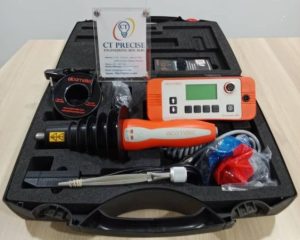 Understanding Holiday Testing (Coating Continuity Test) in Industrial Applications
What Is Holiday Testing?
Holiday Testing is the process of applying a voltage across a coated conductive surface to check whether the coating has any breaks or thin spots that expose the underlying metal. If the coating is compromised, an electrical path is established, triggering an alarm or signal from the testing instrument. The term "holiday" in this context refers to small coating defects or missed spots.Why Is Holiday Testing Important?
Coating systems are often the primary defense against corrosion in harsh environments. A pinhole or a thin area can become a corrosion hot spot, potentially leading to costly damage or failure. Holiday Testing helps to:- Ensure complete coating coverage
- Comply with standards like NACE SP0188 and ASTM D5162
- Prevent premature corrosion in buried or submerged equipment
- Improve long-term asset durability and integrity
Types of Holiday Testing Methods
1. Low-Voltage Wet Sponge Testing
Used for coatings less than 500 microns (20 mils) thick. A wet sponge connected to a detector is dragged across the surface. If the sponge passes over a holiday, the detector beeps or lights up.2. High-Voltage Spark Testing
For coatings thicker than 500 microns, a high-voltage probe (DC or pulsed) is used to scan the coated surface. Any defects are quickly identified through sparking and audible alerts.Voltage Selection Guidelines
Using incorrect voltage may result in missed holidays or damage to the coating. Therefore, the applied voltage must match coating thickness based on standardized charts (e.g., NACE or manufacturer guidelines).Typical Applications of Holiday Testing
- Underground pipelines and tanks
- Storage tank linings
- Coated steel structures
- Concrete surfaces with conductive primers
- Internal linings of process vessels
Industry Standards and Compliance
Holiday Testing must conform to relevant industry standards to ensure reliable results. The most widely accepted standards include:- ASTM D5162 – Standard Practice for Holiday Detection on Coated and Lined Equipment
- NACE SP0188 – Holiday Detection of Fusion-Bonded Epoxy Coatings
- ISO 29601 – Non-destructive testing of coatings
CT Precise Engineering's Holiday Testing Services
At CT Precise Engineering Sdn Bhd, we offer professional Holiday Testing services using calibrated, high-precision instruments suitable for both low and high-voltage methods. Our trained inspectors ensure compliance with international standards and project-specific specifications.Why Choose Us?
- ISO 17020 accredited inspection company
- State-of-the-art Elcometer and Tinker & Rasor holiday detectors
- Experienced technicians for onshore and offshore inspections
- Complete test reports with coating maps and defect markings
Service Coverage Across Malaysia
We provide Holiday Test services across Selangor, Johor, Pahang (Gebeng), Kuala Lumpur, Terengganu, Penang, and other industrial zones with fast mobilization and competitive rates.Holiday Test vs Other Coating Integrity Tests
While Holiday Testing is one of the most direct methods for detecting discontinuities in coatings, it is often used alongside other inspection techniques. For example, Dry Film Thickness (DFT) measurement confirms that the coating meets the required thickness, but cannot detect hidden pinholes. Visual inspection helps identify physical damage or poor surface preparation, but cannot reveal subsurface flaws. Holiday Testing complements these methods by locating hidden weaknesses that other methods may miss.Example: Field Application on Pipeline System
Recently, our team at CT Precise Engineering performed high-voltage holiday testing on a newly coated underground pipeline section in Terengganu. Although visual and DFT inspections passed, holiday testing revealed three pinholes near a weld seam. Early detection allowed the contractor to rework the coating immediately, avoiding costly excavation and future failure.Frequently Asked Questions (FAQ)
Q: Can holiday testing damage the coating?
A: No, when performed with the correct voltage based on coating thickness, holiday testing does not harm the coating. Using excessively high voltage, however, may burn or puncture the surface, which is why calibration and standards compliance is essential.Q: Is holiday testing required on all coated assets?
A: It depends on client specifications, coating type, and service environment. Most buried pipelines, tank linings, and marine structures require it as a final QA step before commissioning.Q: How long does holiday testing take?
A: Testing time depends on the total surface area, coating type, and site accessibility. However, with trained personnel and proper setup, average inspection rates can reach up to 100–150 square meters per hour.Contact Our Inspection Team Today
Ensure your coating systems are free from critical defects before service. Schedule your Holiday Testing today:- Email: sales@ctprecise.com
- WhatsApp: +60 111 683 5616
- Website: www.ctprecise.com
The Highest Quality
THE LARGEST METALS MANUFACTURING
Lorem ipsum dolor sit amet, consectetur adipiscing elit. Sed imperdiet libero id nisi euismod, sed porta est consectetur.
Lorem ipsum dolor sit amet, consectetur adipiscing elit. Sed imperdiet libero id nisi euismod, sed porta est consectetur. Vestibulum auctor felis eget orci semper vestibulum. Pellentesque ultricies nibh gravida, accumsan libero luctus, molestie nunc. In nibh ipsum, blandit id faucibus ac, finibus vitae dui.

