DOSH JKKP CF Renewal Inspection Malaysia – Complete Guide for Factory Owners
Why DOSH JKKP CF Renewal Inspection Is Essential for Malaysian Industries
Keeping industrial equipment safe is not only a legal requirement but also a critical responsibility for every factory owner in Malaysia. Whether you operate a manufacturing facility in Selangor, a petrochemical plant in Pahang, an oil and gas project in Johor, or a fabrication workshop in Penang, maintaining a valid Certificate of Fitness is essential for uninterrupted operations. A successful DOSH JKKP CF Renewal Inspection Malaysia process ensures that pressure equipment remains safe, reliable, and compliant with Malaysian regulations. Many companies mistakenly believe that preparing documentation alone is enough for a successful inspection. In reality, the physical condition of the equipment is equally important. Corrosion, wall thinning, welding defects, coating failures, or structural deterioration can all result in inspection delays or even rejection. This is why professional Non-Destructive Testing plays a significant role before every DOSH JKKP inspection. At CT Precise Engineering Sdn Bhd, we help industries throughout Malaysia prepare their pressure vessels, boilers, storage tanks, piping systems, and critical equipment before official inspections. Our experienced inspection team provides comprehensive Non-Destructive Testing solutions that allow potential defects to be identified before they become costly problems.Understanding DOSH and JKKP Requirements in Malaysia
The Department of Occupational Safety and Health, commonly known as DOSH or Jabatan Keselamatan dan Kesihatan Pekerjaan (JKKP), is responsible for regulating workplace safety involving pressure equipment throughout Malaysia. Companies operating steam boilers, unfired pressure vessels, pressure piping systems, and various lifting equipment must comply with DOSH regulations to maintain safe operations. A valid Certificate of Fitness confirms that equipment has been inspected and found suitable for continued operation. Without CF renewal, companies may experience production shutdowns, regulatory penalties, insurance complications, and unnecessary operational risks. Industries located in major industrial areas such as Pasir Gudang, Pengerang, Gebeng, Port Klang, Shah Alam, Kuantan, Melaka, Negeri Sembilan, Terengganu, Sabah, and Sarawak regularly perform scheduled inspections to ensure continuous compliance with DOSH requirements.Why Many Companies Experience CF Renewal Delays
One of the most common misconceptions is assuming that equipment which appears visually acceptable will automatically pass inspection. Unfortunately, many defects develop beneath the surface and cannot be identified through visual examination alone. Some of the most common reasons for delayed DOSH JKKP CF Renewal include:- Undetected internal corrosion
- Wall thickness below minimum allowable limits
- Weld discontinuities
- Surface cracks
- Leakage around storage tanks
- Coating deterioration
- Poor inspection records
- Missing previous maintenance documentation
How Non-Destructive Testing Supports CF Renewal
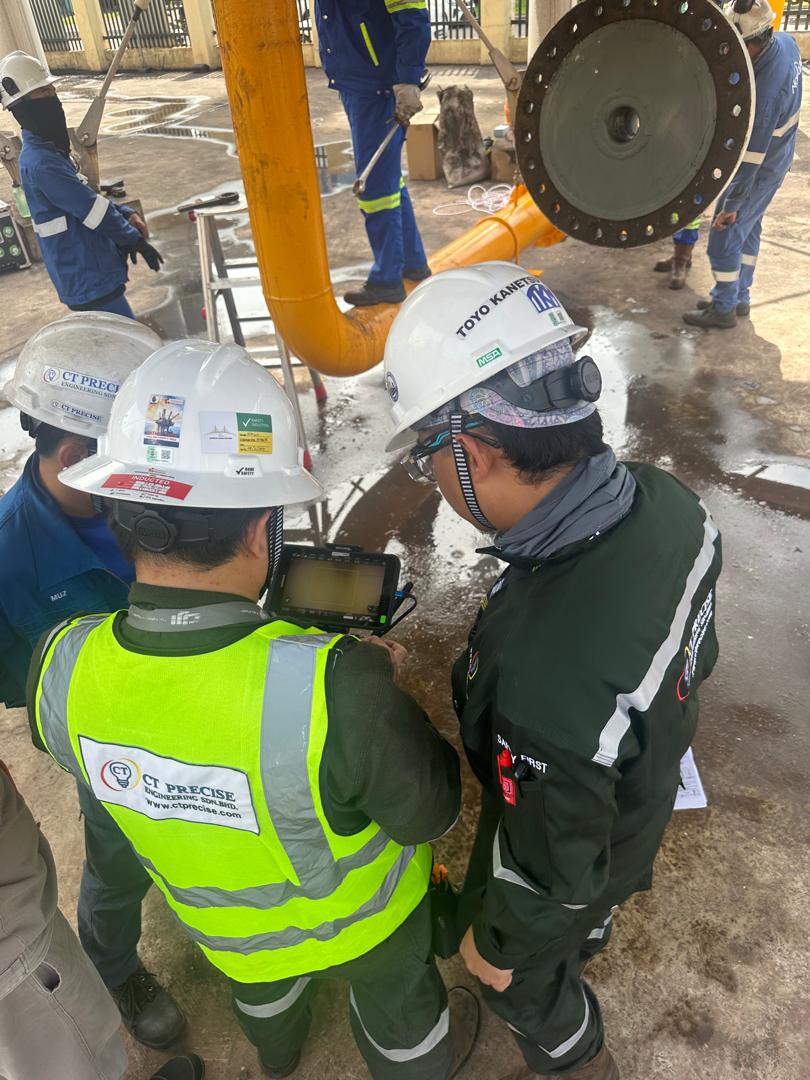
Non-Destructive Testing allows inspectors to evaluate the integrity of industrial assets without causing damage to the equipment being inspected. Instead of relying on assumptions, certified inspectors use specialized equipment to determine the actual condition of pressure-retaining components. Pre-inspection assessments have become standard practice for refineries, petrochemical plants, fabrication companies, marine facilities, power stations, manufacturing factories, and palm oil processing plants throughout Malaysia. By identifying defects before DOSH inspectors arrive, companies gain sufficient time to repair or replace damaged components while minimizing production interruptions.Ultrasonic Thickness Testing Measurement
Monitoring Remaining Wall Thickness Before CF Renewal
Ultrasonic Thickness Testing Measurement is one of the most frequently requested inspection methods before DOSH CF Renewal. The technique measures the remaining wall thickness of pressure vessels, pipelines, boilers, storage tanks, and heat exchangers without interrupting production. Corrosion often develops internally where it cannot be seen during visual inspections. By accurately measuring remaining material thickness, inspectors can determine whether equipment still satisfies design requirements specified by applicable engineering standards. Facilities throughout Johor, Selangor, Pahang, Penang, and Terengganu routinely perform Ultrasonic Thickness Testing Measurement during preventive maintenance programs to avoid unexpected failures and inspection delays.Dye Penetrant Inspection
Finding Surface Defects Before They Become Major Problems
Dye Penetrant Inspection is widely used to locate fine surface-breaking defects that may not be visible with the naked eye. Welded joints, stainless steel fabrications, pressure vessel nozzles, flanges, valves, and structural components can all benefit from this inspection method. Detecting cracks before the official DOSH inspection allows maintenance teams to perform repairs immediately, preventing unnecessary rejection during CF Renewal.Magnetic Particle Inspection
Detecting Surface and Near-Surface Defects in Ferromagnetic Materials
Magnetic Particle Inspection is one of the most reliable inspection methods for identifying surface and slightly subsurface discontinuities in ferromagnetic materials. Pressure vessel welds, structural steel, lifting components, nozzles, flanges, support brackets, and heavy fabrication assemblies are commonly inspected using this method before DOSH JKKP CF Renewal. Even very small cracks can propagate over time due to cyclic loading, vibration, pressure fluctuations, or thermal expansion. Identifying these defects during planned maintenance allows repairs to be completed before the official inspection, reducing project delays and improving workplace safety. CT Precise Engineering performs Magnetic Particle Inspection for clients across Selangor, Johor, Kuantan, Gebeng, Penang, Terengganu, Sabah, and Sarawak using calibrated equipment and qualified inspection personnel.Radiographic Testing
Internal Weld Inspection with High Accuracy
Radiographic Testing remains one of the most trusted inspection techniques for evaluating weld integrity. Using Gamma Ray or X-Ray technology, internal discontinuities such as slag inclusion, porosity, incomplete penetration, and lack of fusion can be detected without damaging the component. For pressure vessels, boilers, pressure piping systems, and fabricated equipment, Radiographic Testing provides permanent inspection records that are valuable during DOSH compliance reviews and future maintenance planning. CT Precise Engineering operates an AELB licensed Radiographic Testing facility complete with darkroom capability and BOMPIT compliance, allowing us to provide safe and reliable inspection services throughout Malaysia.Phased Array Ultrasonic Testing
Advanced Inspection for Critical Welds
Phased Array Ultrasonic Testing has become one of the preferred inspection methods for critical industrial assets because it produces detailed cross-sectional images of welds and components. Compared to conventional ultrasonic testing, PAUT offers greater coverage, improved defect characterization, and faster inspection times. This technology is widely used during shutdown projects, refinery maintenance, pressure vessel fabrication, and piping inspections where inspection quality is essential. Many facilities in Pengerang, Pasir Gudang, Port Klang, and Gebeng have adopted PAUT as part of their preventive maintenance strategy to improve equipment reliability before regulatory inspections.Time of Flight Diffraction
Accurate Flaw Sizing for Engineering Assessment
Time of Flight Diffraction is recognised internationally for its ability to accurately size weld defects. Instead of simply identifying whether a defect exists, TOFD helps engineers determine its height and location, providing valuable information for engineering fitness-for-service assessments. This inspection technique is commonly used together with Phased Array Ultrasonic Testing during major shutdowns, new fabrication projects, and pressure vessel assessments to satisfy international quality standards.Holiday Test and Vacuum Box Testing
Protecting Storage Tanks Against Leakage and Corrosion
Coating failure is one of the leading causes of corrosion in industrial facilities. Holiday Testing verifies coating integrity by identifying pinholes, voids, or coating discontinuities before corrosion begins to attack the steel substrate. Vacuum Box Testing complements this process by identifying leakage through welded joints, especially on storage tank floors constructed according to API standards. These inspection methods are frequently requested for storage tanks located in petroleum terminals, chemical plants, palm oil facilities, and marine terminals throughout Malaysia.Hardness Testing
Verifying Material Properties During Maintenance
Hardness Testing is often performed following welding, fabrication, repair work, or heat treatment. Measuring material hardness helps verify that mechanical properties remain within acceptable limits and assists engineers in confirming compliance with project specifications. Combined with other Non-Destructive Testing methods, Hardness Testing contributes to a more complete assessment before DOSH CF Renewal inspections.Supporting API Inspection Requirements
Many facilities preparing for DOSH JKKP CF Renewal also follow internationally recognised API inspection standards to improve long-term asset integrity.API 510 Pressure Vessel Inspection
Maintaining Safe Operation of Pressure Equipment
API 510 focuses on in-service pressure vessel inspection, repair, alteration, and rerating. Ultrasonic Thickness Testing Measurement, Radiographic Testing, Magnetic Particle Inspection, Dye Penetrant Inspection, and Phased Array Ultrasonic Testing are frequently used to evaluate vessel integrity before API assessments.API 570 Piping Inspection
Managing Corrosion in Industrial Piping Systems
API 570 provides inspection requirements for process piping systems operating in refineries, petrochemical facilities, and manufacturing plants. Regular thickness monitoring and weld inspection help prevent unexpected piping failures while supporting regulatory compliance.API 653 Storage Tank Inspection
Ensuring Long-Term Storage Tank Reliability
API 653 inspection programs include floor inspection, shell evaluation, roof assessment, coating examination, leak testing, and corrosion monitoring. Vacuum Box Testing, Holiday Testing, and Ultrasonic Thickness Testing Measurement are commonly performed before formal API inspections.Why Choose CT Precise Engineering for DOSH JKKP CF Renewal Inspection in Malaysia?
Preparing for a DOSH JKKP CF Renewal Inspection requires more than simply arranging an inspection date. It requires proper planning, experienced inspectors, accurate testing methods, and reliable reporting. At CT Precise Engineering Sdn Bhd, we help our clients identify potential issues before they become costly compliance problems. Since 2010, we have supported industries throughout Malaysia by delivering professional inspection solutions for pressure vessels, steam boilers, storage tanks, piping systems, structural steel, and fabrication projects. Our experienced inspection team works closely with maintenance engineers, plant managers, and project teams to ensure every inspection is performed safely, efficiently, and according to industry standards.Complete Inspection Services Under One Roof
Helping Industries Reduce Downtime and Improve Compliance
CT Precise Engineering provides both Conventional and Advanced Non-Destructive Testing services, allowing clients to complete multiple inspection requirements through a single inspection partner.- Ultrasonic Thickness Testing Measurement
- Dye Penetrant Inspection
- Magnetic Particle Inspection
- Radiographic Testing
- Phased Array Ultrasonic Testing
- Time of Flight Diffraction
- Holiday Test
- Vacuum Box Testing
- Hardness Testing
Serving Industrial Clients Across Malaysia
CT Precise Engineering proudly supports clients throughout Malaysia, including Selangor, Kuala Lumpur, Johor, Pasir Gudang, Pengerang, Kuantan, Gebeng, Terengganu, Penang, Kedah, Melaka, Negeri Sembilan, Port Klang, Sabah, and Sarawak. Whether your facility operates in the oil and gas industry, petrochemical sector, manufacturing, marine engineering, power generation, palm oil processing, or heavy fabrication, our qualified inspection team is ready to provide reliable inspection solutions tailored to your operational requirements.Related Inspection Services
In addition to supporting DOSH JKKP CF Renewal Inspection, CT Precise Engineering also provides inspection services for API 510 Pressure Vessel Inspection, API 570 Piping Inspection, API 653 Storage Tank Inspection, shutdown inspection programs, corrosion monitoring, asset integrity assessments, and third-party inspection services. To learn more about our Conventional Non-Destructive Testing services, please visit: https://www.ctprecise.com/service/conventional-ndt/Frequently Asked Questions
How often should pressure vessels be inspected before CF Renewal?
The inspection interval depends on equipment type, operating conditions, corrosion rate, and DOSH requirements. Many facilities perform periodic Non-Destructive Testing well before the scheduled renewal date to avoid unexpected findings.Which inspection methods are commonly required?
Ultrasonic Thickness Testing Measurement, Dye Penetrant Inspection, Magnetic Particle Inspection, Radiographic Testing, Phased Array Ultrasonic Testing, Time of Flight Diffraction, Holiday Test, Vacuum Box Testing, and Hardness Testing are among the most frequently requested methods depending on the equipment and inspection scope.Can CT Precise Engineering perform on-site inspections?
Yes. Our inspection team is equipped with portable inspection equipment and provides on-site services across Malaysia, including shutdown projects, routine maintenance, and emergency inspection requirements.Conclusion
A successful DOSH JKKP CF Renewal Inspection Malaysia process begins long before the official inspection date. Proper planning, accurate inspection records, and comprehensive Non-Destructive Testing significantly reduce the risk of delays, equipment failure, and unexpected repair costs. By partnering with an experienced inspection company such as CT Precise Engineering Sdn Bhd, factory owners and maintenance teams can confidently prepare their pressure equipment to meet Malaysian regulatory requirements while maintaining safe and reliable operations. If your company is preparing for an upcoming DOSH JKKP CF Renewal Inspection anywhere in Malaysia, contact CT Precise Engineering today for professional inspection services delivered by experienced and qualified inspectors.The Highest Quality
THE LARGEST METALS MANUFACTURING
Lorem ipsum dolor sit amet, consectetur adipiscing elit. Sed imperdiet libero id nisi euismod, sed porta est consectetur.
Lorem ipsum dolor sit amet, consectetur adipiscing elit. Sed imperdiet libero id nisi euismod, sed porta est consectetur. Vestibulum auctor felis eget orci semper vestibulum. Pellentesque ultricies nibh gravida, accumsan libero luctus, molestie nunc. In nibh ipsum, blandit id faucibus ac, finibus vitae dui.